
Everyday Comfort
Supports whole-body comfort, including researched benefits for joints and skin.
PEA FOR DOGS
200 mg of micronized PEA in every Amiquip chew. Serious daily support for comfort, mobility, and healthy aging.
Free USA shipping • From $29.99
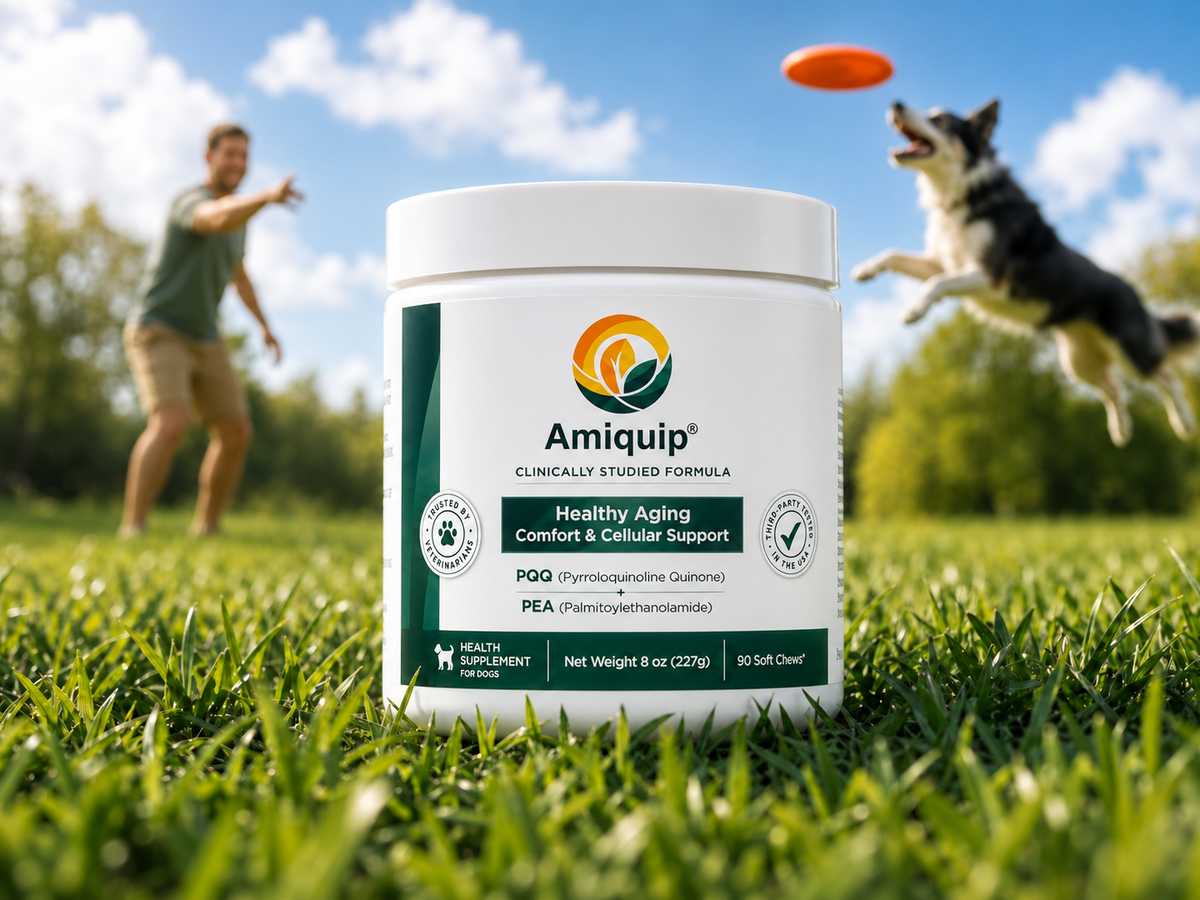
A closer look at PEA
Your dog's body already produces PEA (palmitoylethanolamide) naturally in response to stress and injury. As they grow from a puppy to an adult and senior, supplementing with PEA supports their body's own systems for comfort, movement, and healthy inflammatory balance.
Supports whole-body comfort, including researched benefits for joints and skin.
Helps support a balanced inflammatory response as dogs age.
PEA has been researched for its role in modulating both the nervous system and immune system.
VETERINARIAN PERSPECTIVE

WHY AMIQUP FOR PEA?
| Comparison | Amiquip | Typical PEA Soft Chew |
|---|---|---|
| PEA per chew | 200 mg | 40 mg |
| PEA form | Micronized | Varies |
| Added PQQ | 6 mg | Typically none |
5x the PEA. Plus cellular support for healthy aging.
Try Amiquip
WHY AMIQUP?
Amiquip was built specifically for aging dogs, combining PEA with cellular energy support and an easy daily format designed to fit naturally into their routine.
A refined form of PEA selected for optimal absorption.
Supports mitochondrial function and cellular energy systems involved in healthy aging.
No powders or capsules. Just a simple chew that fits naturally into the day.
Clean formula featuring two active ingredients with whole-body benefits.
Comfort support for today. Cellular support for the years ahead.
CLINICALLY STUDIED AMIQUIP
of owners whose dogs received Amiquip reported increased energy or activity
Amiquip was evaluated in a randomized, double-blind, placebo-controlled pilot study involving senior dogs. The formula was well tolerated throughout the study.
Beyond the changes owners noticed, metabolomic analysis also found shifts in cellular energy pathways linked to mitochondrial function.
REAL DOGS. REAL OWNERS.
"My 10 year old Chi is doing SO much better since he began taking this!! His eyes are brighter, he's dancing again, he has a spring to his step and can keep up with his sister again!!"
Renee
"Since I have been giving my dog this I haven't seen him being 'spaced out' like before. He has been running around my yard more now as well."
Keziah
"I know these take a while to work, but I saw a difference in our dog within the first week! I noticed his joints got way better, he doesn't hesitate as much, and his legs don't shake like they used to."
Nikki
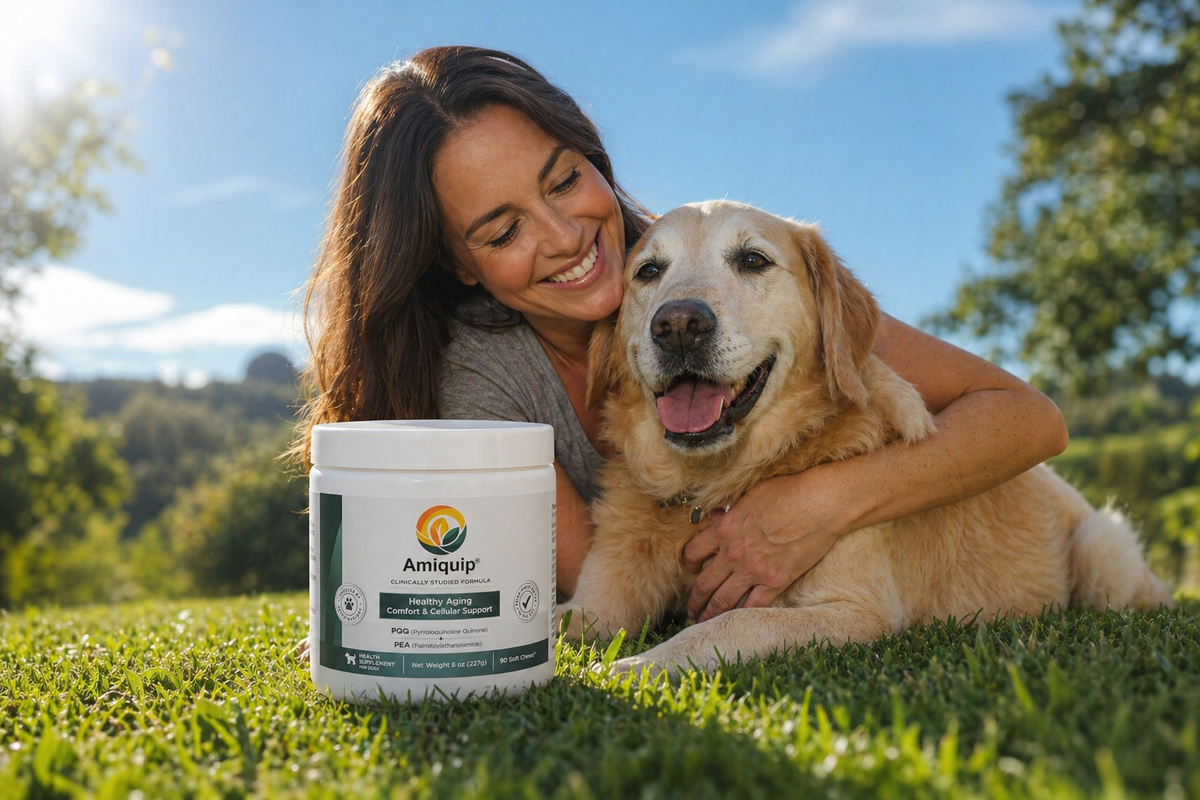
Amiquip's formula is clinically studied for whole-body comfort, natural energy and vitality.
Try one-time or save with a subscription
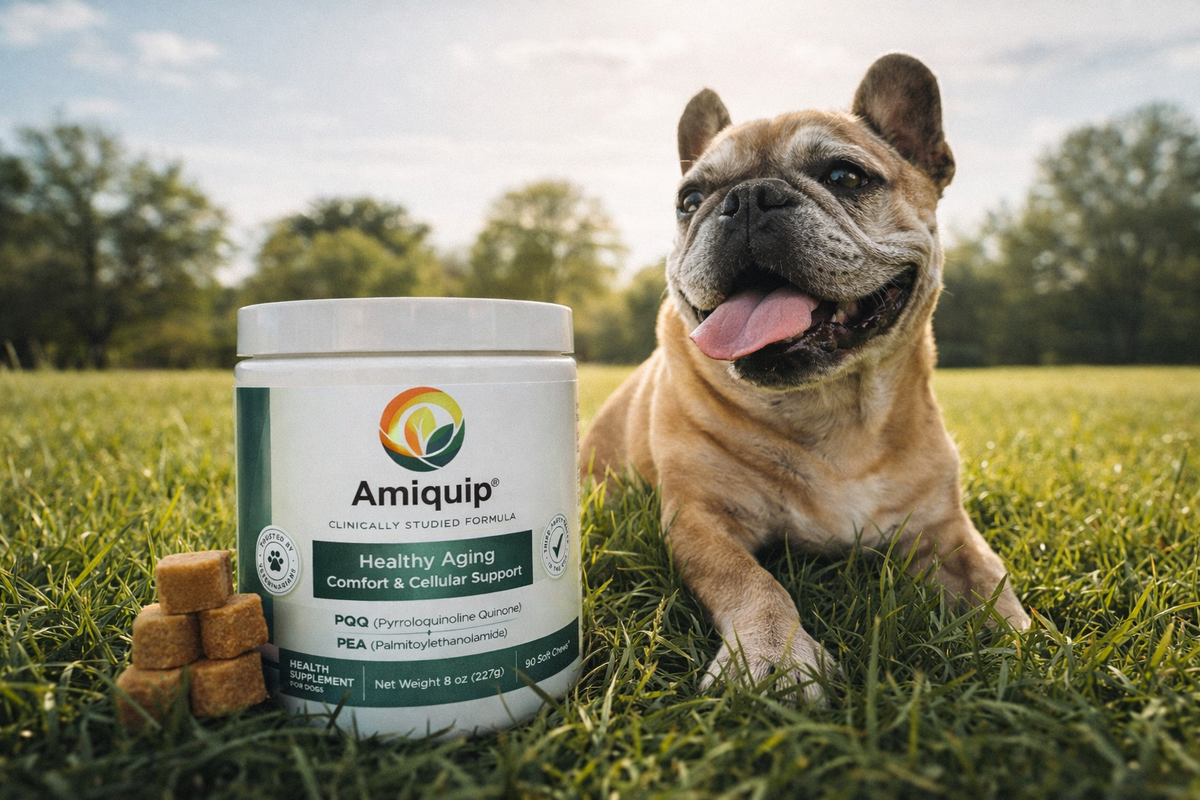
SIMPLE TO GIVE. SERIOUS ABOUT QUALITY.
Give the chew. Get on with the day.
No Corn • No Wheat • No Soy • No Dairy • No Artificial Dyes or Fillers • Vegan • Sensitive Dog Safe

TRY IT FOR 60 DAYS
Try Amiquip for 60 days. If you’re not thrilled with it, tell us and we’ll refund your order.*
Amiquip is designed to support the common challenges that come with natural aging, including stiffness, reduced mobility, lower energy, and less enthusiasm for everyday activity. Its formula combines PEA to support comfort and a healthy inflammatory response with PQQ to support cellular energy and mitochondrial function.
The goal is simple: help aging dogs stay more comfortable, active, and engaged in daily life for as long as possible.
Amiquip is designed for dogs entering their senior years or beginning to show the normal signs of aging, such as stiffness, slower movement, lower energy, or less enthusiasm for walks and play.
You do not have to wait until those changes become significant. Many owners choose to start proactively as their dog reaches middle age or seniorhood, with the goal of supporting comfort, mobility, cellular energy, and healthy aging before they noticeably slow down.
Amiquip was built differently from the start. Instead of packing a long ingredient list into one chew, it focuses on two high-impact ingredients: 200 mg of micronized PEA for comfort and healthy inflammatory balance, plus 6 mg of PQQ to support cellular energy and healthy aging. Unlike many other PEA supplements, it's a soft chew designed specifically for senior dogs, and the finished Amiquip formula itself has been evaluated in a randomized, double-blind, placebo-controlled pilot study.
In short: more focused, more PEA, added cellular support, and real research behind the finished formula.
Yes. Amiquip is designed for daily use and long-term support. Its streamlined formula avoids unnecessary additives, making it suitable for ongoing supplementation when used as directed.
Amiquip comes in a soft chew format that can be given once daily (number of chews per day is based on dog size). Most dogs take it like a treat, with no mixing or preparation required.
Amiquip is designed to fit easily into most dogs’ routines. If your dog is on medications or a specialized diet, it’s always best to consult your veterinarian before adding any new supplement.
In our 6-week evaluation, the vast majority of owners began noticing improvements in their dogs’ energy, activity, and overall quality of life within that timeframe. Some owners report seeing positive changes sooner, though every dog ages differently. For best results, Amiquip® is designed to be used consistently as part of a daily routine.
Amiquip is backed by a 60-day money-back guarantee. If you’re not satisfied, just let us know.


Your cart is currently empty.


